
What really happened?
The US and Iran have signed a Memorandum of Understanding, which is definitively not a peace deal, it is a deal to seek a peace deal. Here are the key points.
It extends the ceasefire for 60 days
The Strait of Hormuz will be open toll-free during that period, and the US naval blockade will be lifted
Sanctions against Iran will be immediately lifted, including on their oil Exports.
Iran agrees not to develop nuclear weapons and to negotiate over the fate of their nuclear stockpile
Within days the reality of the situation has diverged from the language of the MoU. The point regarding Hormuz, is that while the Strait is open toll-free it has emerged that it is still under the control of the IRGC and it has already been ‘shut’ by Iran over US threats and Israeli aggression. The sanctions being lifted on Iran, and in particular the oil sanctions, means that Iran can once again sell its oil at market value, rather than at a huge discount, and to a wider range of buyers, which will provide welcome relief to their economy. As will the $300 billion reconstruction fund the US is committed to setting up with its Gulf partners. The Nuclear issue is perhaps the most important as it is the one place that president Trump still has the capacity to claim a victory, however the language is weak, and Iran’s pledge to not develop a nuclear weapon is worth the paper it’s written on.
What does the deal mean?
This deal pushes most of the key issues down the line, and has done nothing to move the redlines that both negotiating parties have. However, it is a signal from both sides that they do not want to resolve this with war-fighting or kinetics. The key takeaway from the deal is that it attempts to detach the US from the Israeli led escalation pathway. That is why we are seeing so much support for this deal from the Gulf States as opposed to the JCPOA. This is objectively a worse deal for the US, and in particular Israel, but has the potential to be more effective for regional security. The next steps will be that the US and Iran will hold their bilateral negotiations, these will overrun by months, and be very complex. The Gulf States and Iran will also hold separate negotiations, as a new regional architecture emerges away from the ‘axis of Abraham’. The other thing here is that, while this may not last, the money that Iran gets will provide massive relief to their economy, and render the current blockade (and any return to that strategy) far less effective. In some ways this deal has split the risk; a kinetic escalation is now far less likely, but any escalation will be more severe.
Will the deal Last?
It depends on a few factors, whether the US can truly restrain Israel in Lebanon, whether the Iranians will give President Trump something on the nuclear stockpile that he can tout as a victory (my suspicion would be that the Strait of Hormuz will replace the nuclear weapon as the primary deterrent for Iran), and finally if Iran feel that their position globally is improved by the deal. If any of these factors aren’t met it is more than likely we will return to a degree of conflict. There is also the very real possibility that Iran will overplay their hand and their attempts to provoke Israel will bring the US down on the Israeli side. For my money there are a lot of compelling reasons for both parties to create a sort of pseudo-peace, but Iran will be aware of the plummeting oil reserves, as well as the insecurity in the market, and despite the current smugness of the oil-bears, that is the pressure point that Iran will hit very quickly if provoked. Which puts us in a structural trap where it is unlikely that the US will get a favorable deal, but there is the recognition that Iran have a serious capacity to compel them to act, and will likely have the gulf states on side.
Why did Iran sign?
Iran signed the deal because there is a heavy economic burden on their economy from the extended conflict, including the current war and the years preceding it. Unlike Russia, Iran has not pivoted to a fully war focused economy, and the IRGC holding companies are extremely diverse and rely on a functional economy. So sanctions relief, as well as the money from the US and the UAE will be very welcome as a way to further consolidate their control over the Iranian state. Having secured hard power in the monopoly on violence, securing soft power next is the critical move. Another consequence of the oil sanctions being removed will be the removal of Chinese discount leverage over Iran, as they no longer have to sell to the buyer of last resort. This will encourage Iranian strategic autonomy, and conversely could raise oil prices as there is no artificial suppression. Furthermore by showing that they are willing to end the conflict they are signaling to the Gulf States that they are willing to do business and this will accelerate the transition in the Gulf of Iran being part of the regional apparatus as opposed to outside of it. It is also important to note that in Iran this is being reported as a strategic pause as opposed to the end of the War. They have not surrendered control over the strait of Hormuz nor have they unconditionally agreed to surrender their nuclear material. We should remember then that this is not a peace deal, but rather a memorandum that they will try to have peace on their terms.
Why did the US sign?
The US are signing this deal because they have come to two conclusions. I. Their strategic interests and Israel’s strategic interests are not aligned, and II. There is no way for the US to improve their bargaining position in the short term without a massive escalation of force. It will remain unsaid but, like Iran, the US will be treating this as a strategic pause, whether thats until after the midterms or more rapidly, the US will be willing to re-enter a kinetic phase of warfare if the negotiations for the proper peace deal don’t go their way. The economic factor as well will be driving President Trump’s desire to achieve something that the market will treat as a peace, to calm oil markets, and to reinforce the rallies in the NASDAQ and the DOW backed by the AI boom, and soaring chip stocks. However, in many ways this is the ‘off ramp’ for Iran that the strategy of compellance demands, the only question now is that will the US be able to accept their own off ramp when all is said and done.
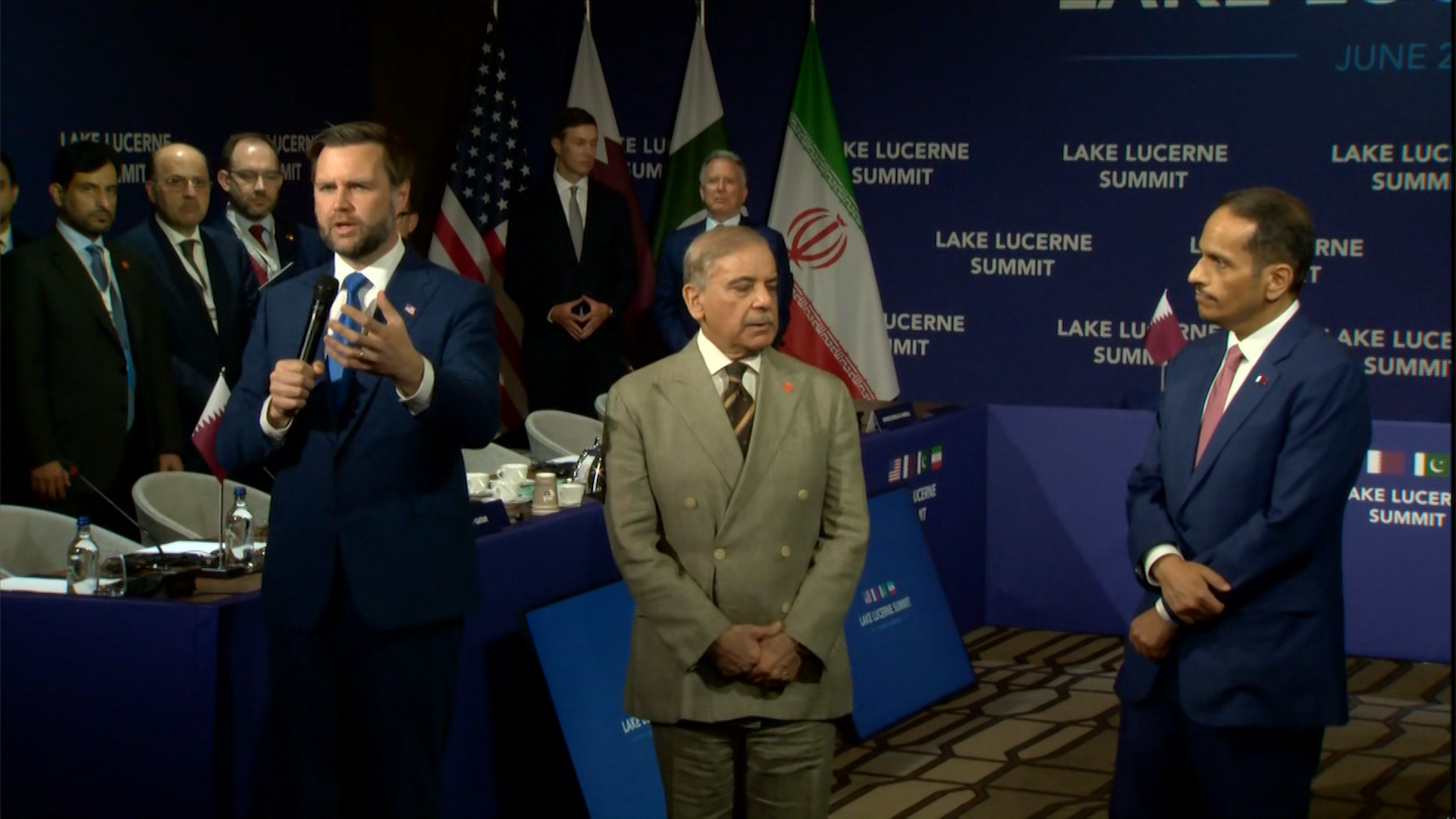
Lake Lucerne Update
After the first round of talks there has allegedly been good progress.There is still a large amount to process, from the technical aspects of the MoU to the actual negotiations. The key thing though is that the US is signaling that the Strait of Hormuz is open, reflecting the US’ main fear that any breakdown in talks or even ambiguity will spook the markets.
They reached an agreement. It settled nothing, and was filed as a win. Underneath it, a war waits, written into the deal in plain language, for the day the talking stops being convenient.
This is what the file did with that.
https://rossboulton1.substack.com/p/the-iran-mou-3-stooges-version
Great write up.